Flat · Metal · Leak · Industrial

Tempe Commercial Roof Repair

We find where water gets into flat, metal, and industrial roofs on Tempe commercial buildings, then repair the seam, drain, curb, or fastener that let it in.

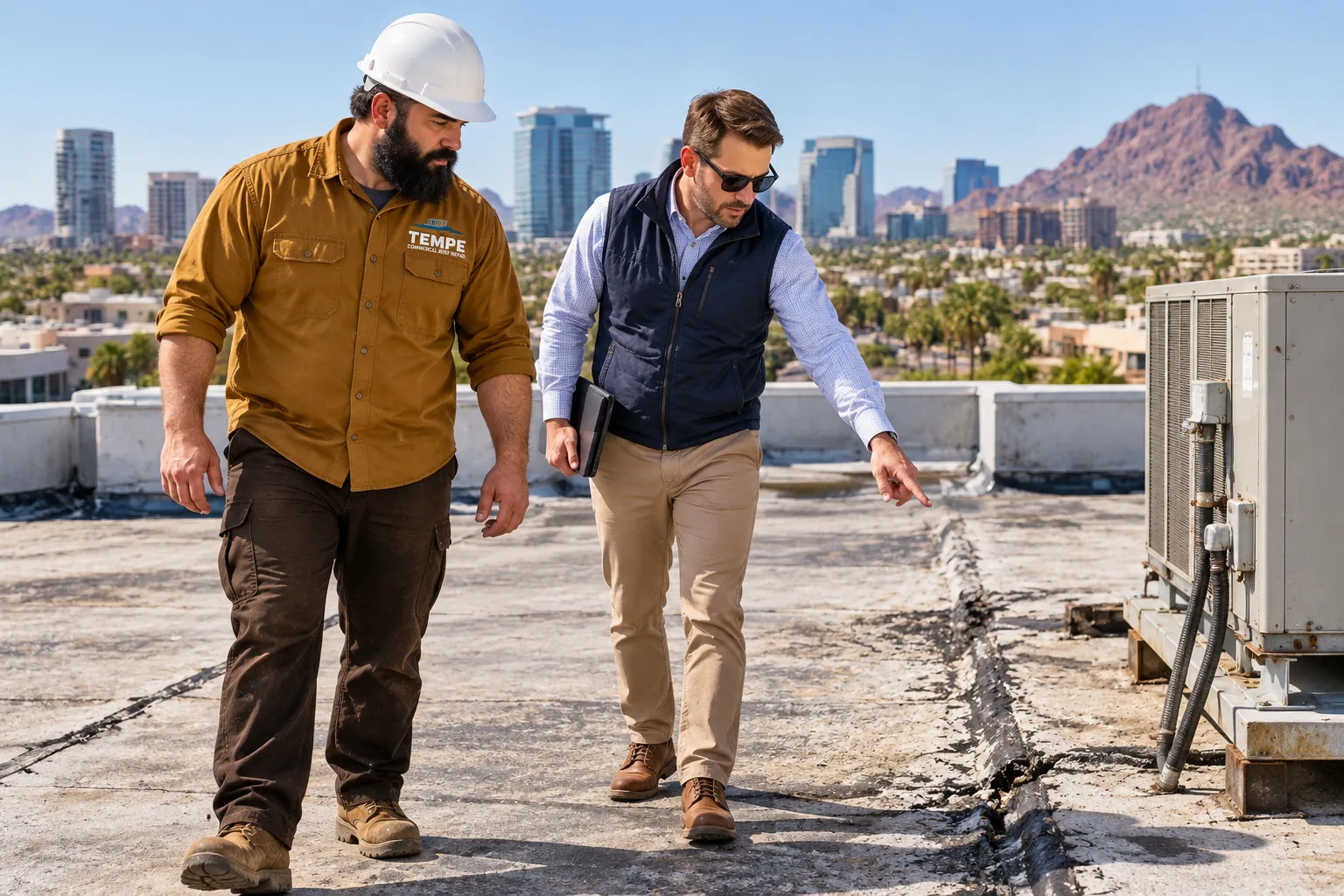
Roofer and building owner inspecting a split seam on an aged flat roof in Tempe, AZ
  • Roof Walk FirstInspection before any repair
  • Four Kinds Of RepairFlat, metal, leak, industrial
  • Monsoon SeasonJune 15 to September 30
  • Tempe Plus Six AreasGuadalupe to Discovery District

Roof Repairs For Tempe Commercial Buildings

Each repair starts with what you can see from the roof or from the ceiling below, then fixes the part of the roof that actually failed.

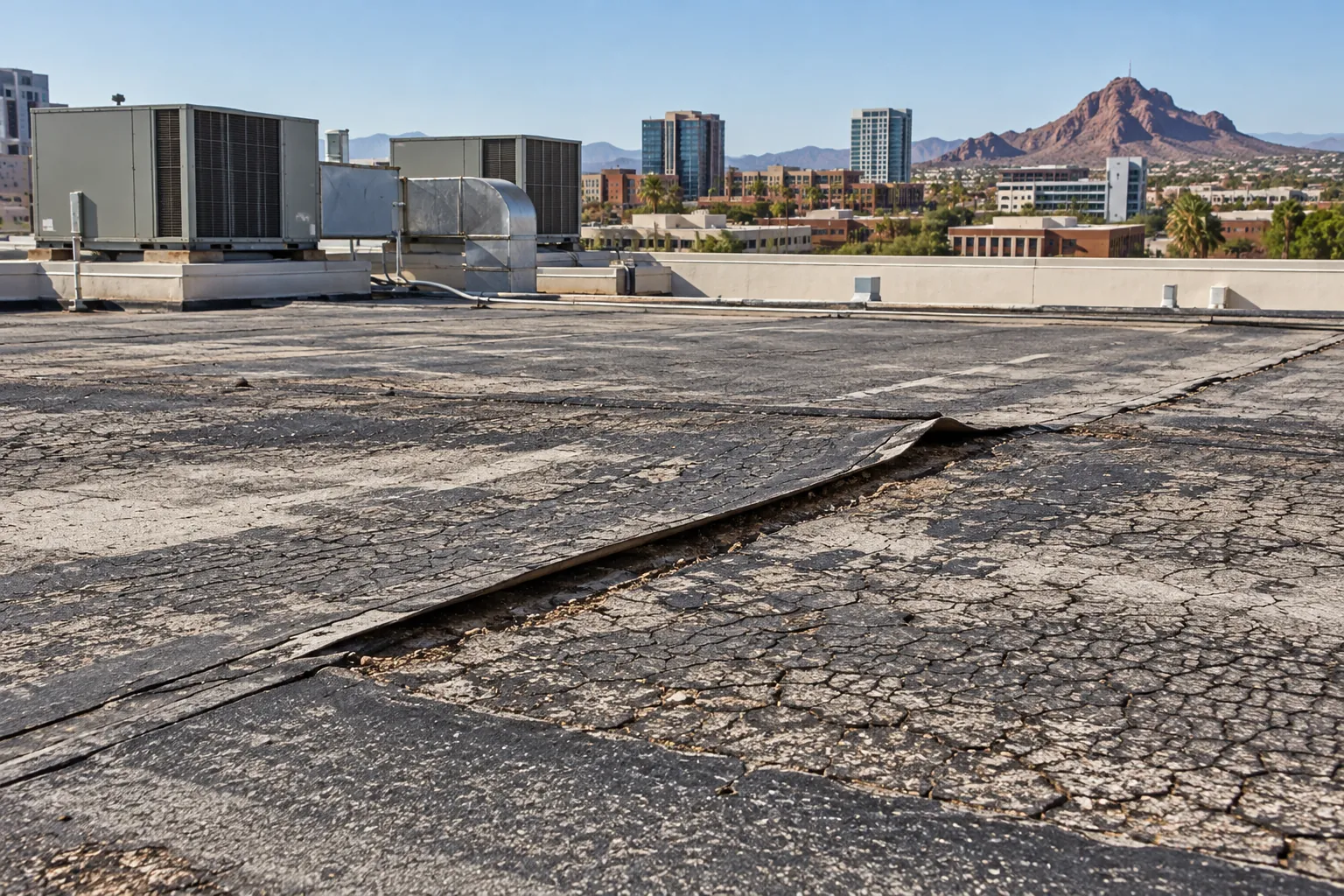
Lifted seam and cracked membrane on an aged flat roof
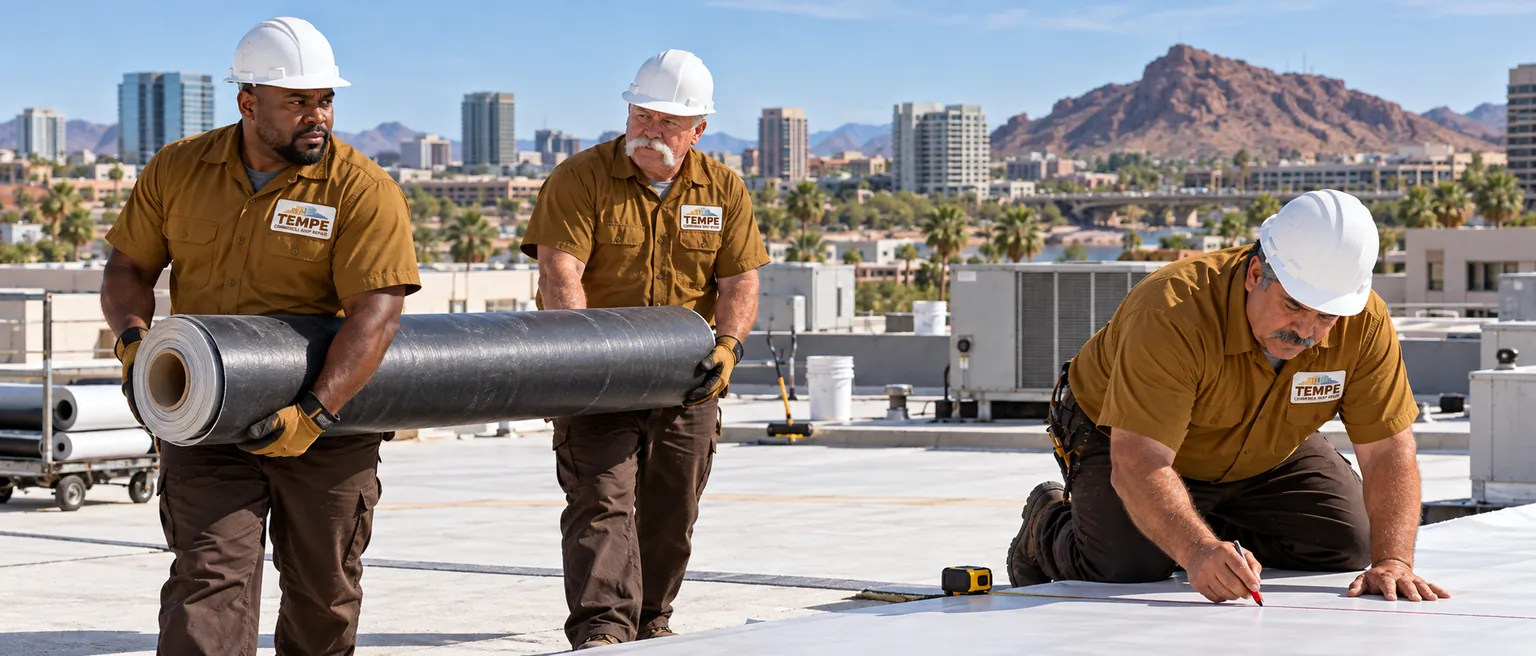
Roofers carrying a roll of new membrane across a Tempe flat roof

Flat Roof Repair

Seams split by years of heat movement, blisters, and worn parapet flashing on TPO, EPDM, modified bitumen, and built-up gravel roofs, repaired with sheet that matches what is already there.

Repair Includes
  • Re-welding open TPO seams
  • Cutting out blisters and patching the spot
  • Rebuilding dried, cracked parapet flashing
Flat roof repair in Tempe
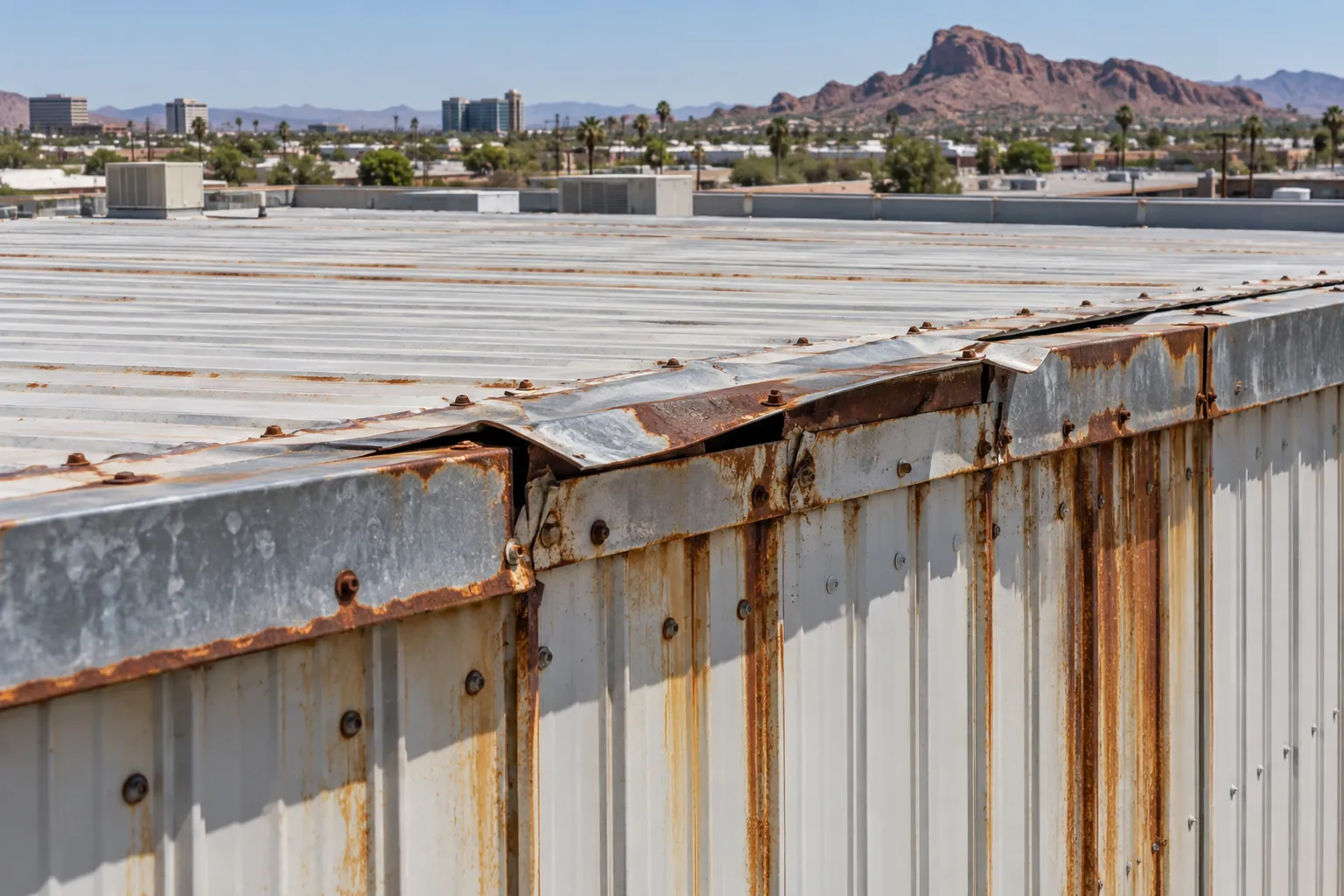
Rust bloom along an end lap and fastener heads on a metal roof
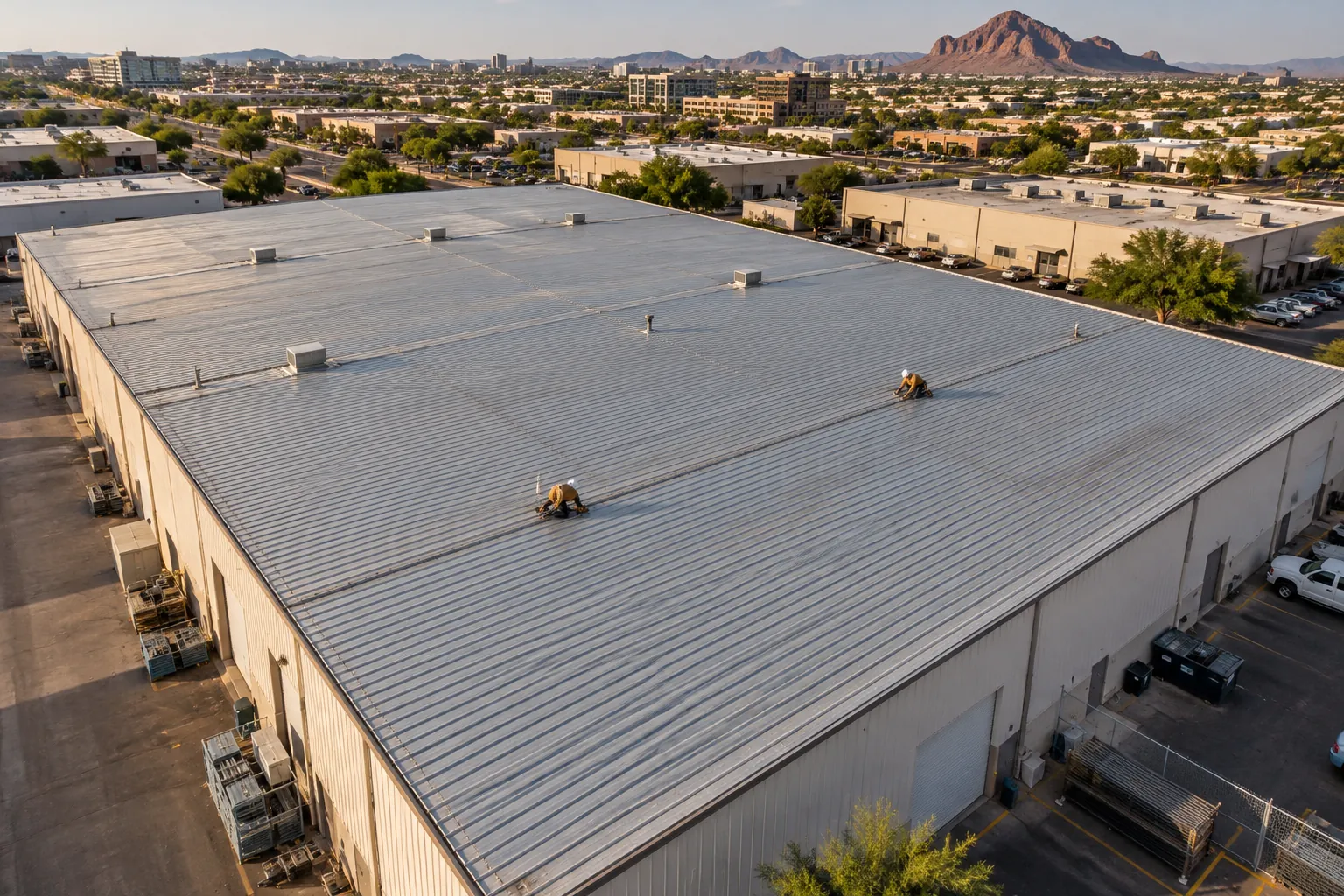
Ribbed metal panel roof on a Tempe warehouse

Commercial Metal Roof Repair

Backed-out screws, baked rubber washers, open side laps, and yellowed skylight panels on warehouse and shop roofs, where daily heat swings work the panels loose.

Repair Includes
  • Oversized fasteners with fresh washers
  • Butyl tape at side laps and end laps
  • Rust spots wire-brushed, primed, and coated
Metal roof repair details
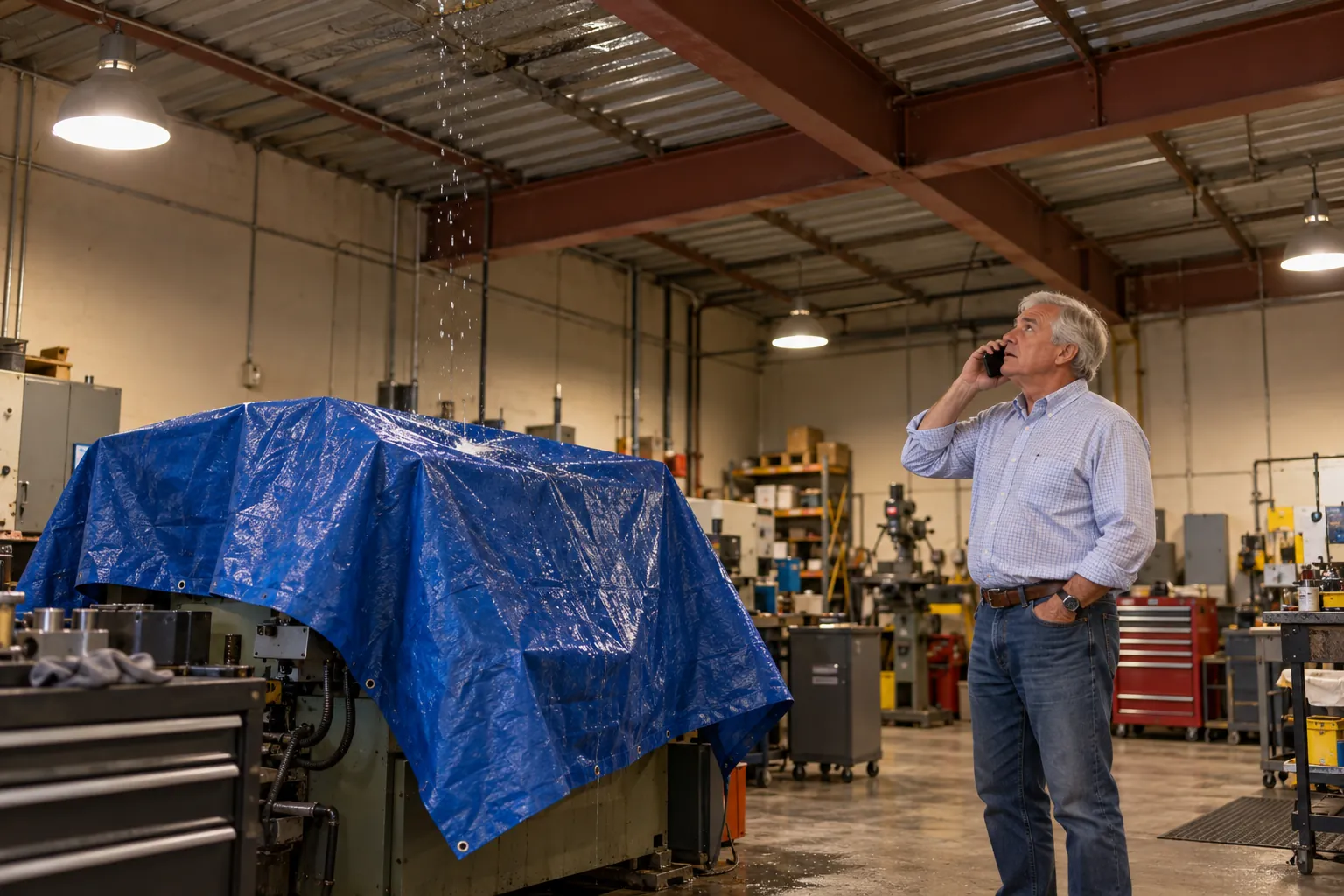
Shop manager on the phone beside a tarp over machinery under a roof leak
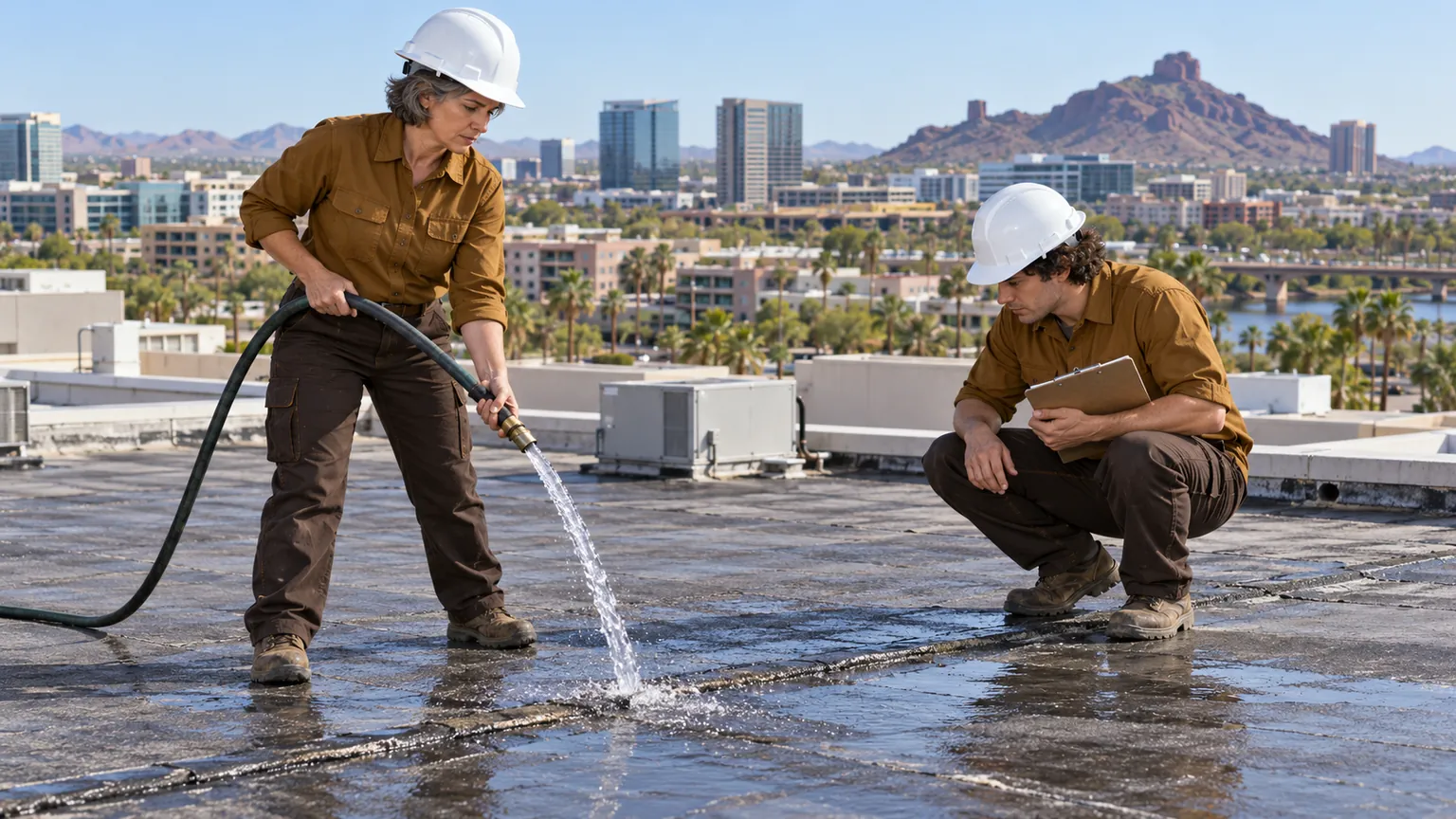
Roofer water-testing one section of a flat roof while a second logs the result

Commercial Roof Leak Repair

Ceiling stains rarely sit under the opening. Water runs along deck flutes and insulation first, so we trace it upslope and water-test one suspect area at a time.

Repair Includes
  • Moisture-meter scan for wet insulation
  • Temporary leak control while the roof dries
  • Permanent repair at the confirmed entry point
How we trace roof leaks
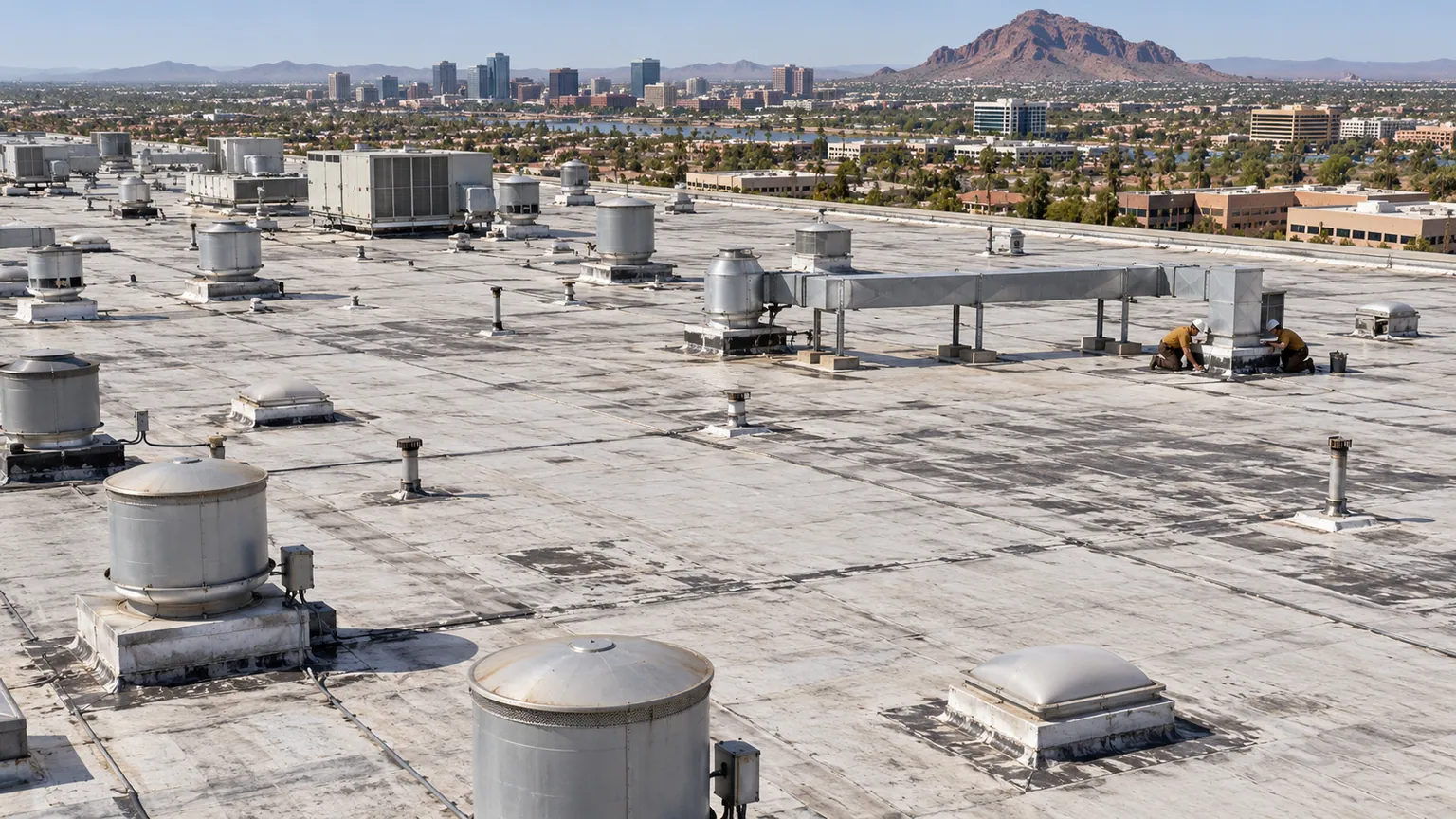
Plant roof crowded with exhaust stacks, fans, and rooftop units
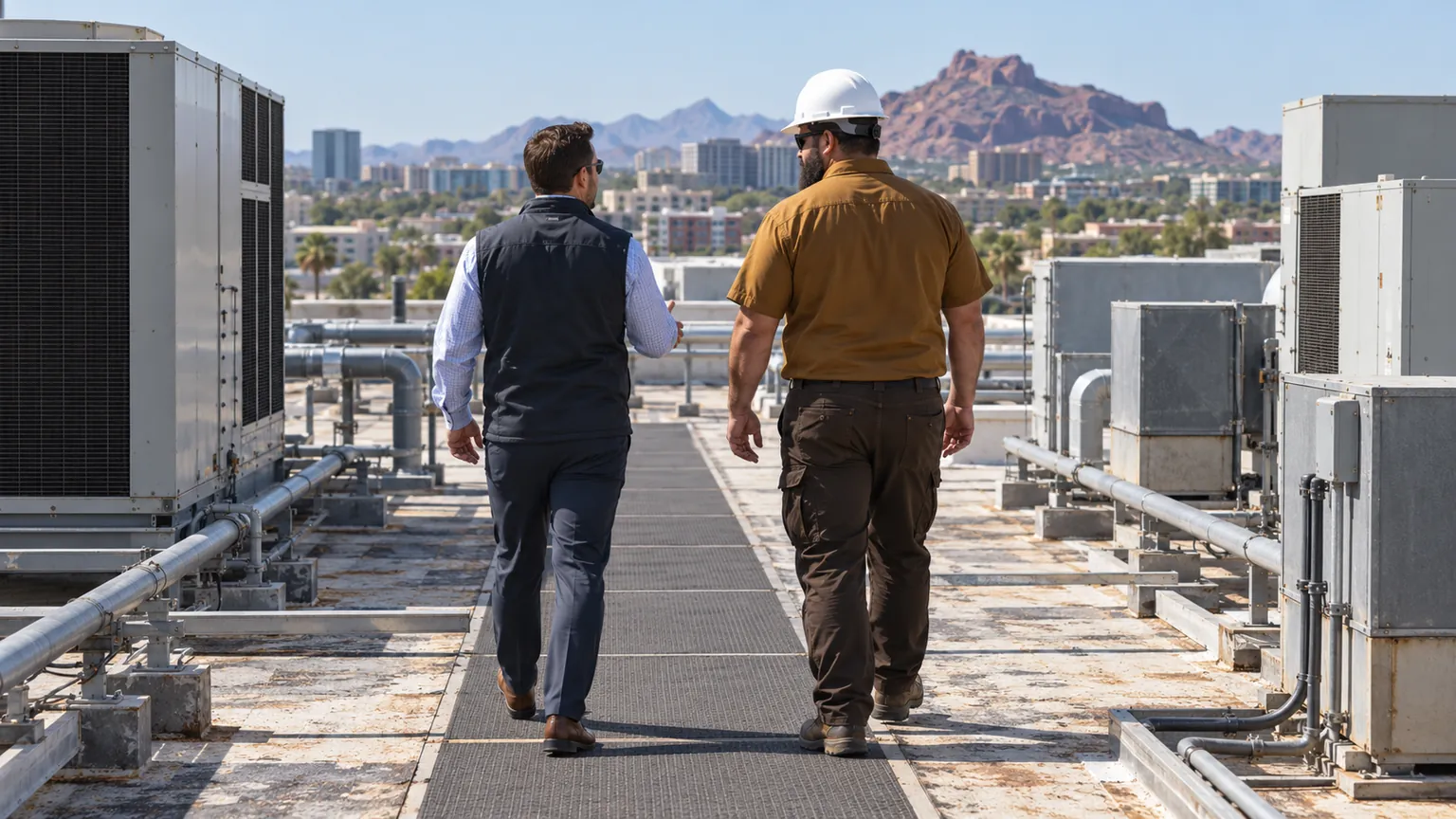
Roofer and plant manager walking a rooftop walkway between units

Industrial Roof Repair

Plant roofs carry exhaust fans, process vents, and dust collectors that leave residue on the membrane. Repairs get cleaned, checked against the discharge, and scheduled around production.

Repair Includes
  • Residue cleaned before any patch goes down
  • Curb flashing rebuilt around equipment
  • Hot work planned with your facility team
Industrial roof repair in Tempe

Common Leak Points On A Tempe Roof

Most leaks start where the membrane stops, turns, or gets cut. These six details get checked first on every roof walk.

Top-down plan of a flat commercial roof marking six common leak points123456
  1. Split Or Lifted Seams

    Years of heat movement pull seams apart. On TPO the crew probes each weld with a hand tool; on built-up roofs they look for open laps between plies.

  2. Dust-Packed Drains

    Strainers and drain bowls fill with dust and debris, so water holds against the membrane and leaves a dark ponding ring that widens each season.

  3. HVAC And Exhaust Fan Curbs

    Base flashing at rooftop units cracks and pulls loose where service techs kneel, lean access panels, and set tools down.

  4. Parapet Caps And Wall Flashing

    Sealant at cap joints dries and cracks in the sun. Water then runs down behind the wall flashing and shows up inside along an exterior wall.

  5. Pitch Pans At Pipes And Conduit

    Filler inside pitch pans shrinks away from the metal, opening a ring around the pipe or conduit that drains straight into the deck.

  6. Scuppers And Edge Metal

    Through-wall scuppers clog at the box and leak at the corners where edge metal meets the parapet, especially after a monsoon dust storm.

The Repair Work Order

Every repair visit follows the same five steps, so you know what happens on the roof and what you get afterward.

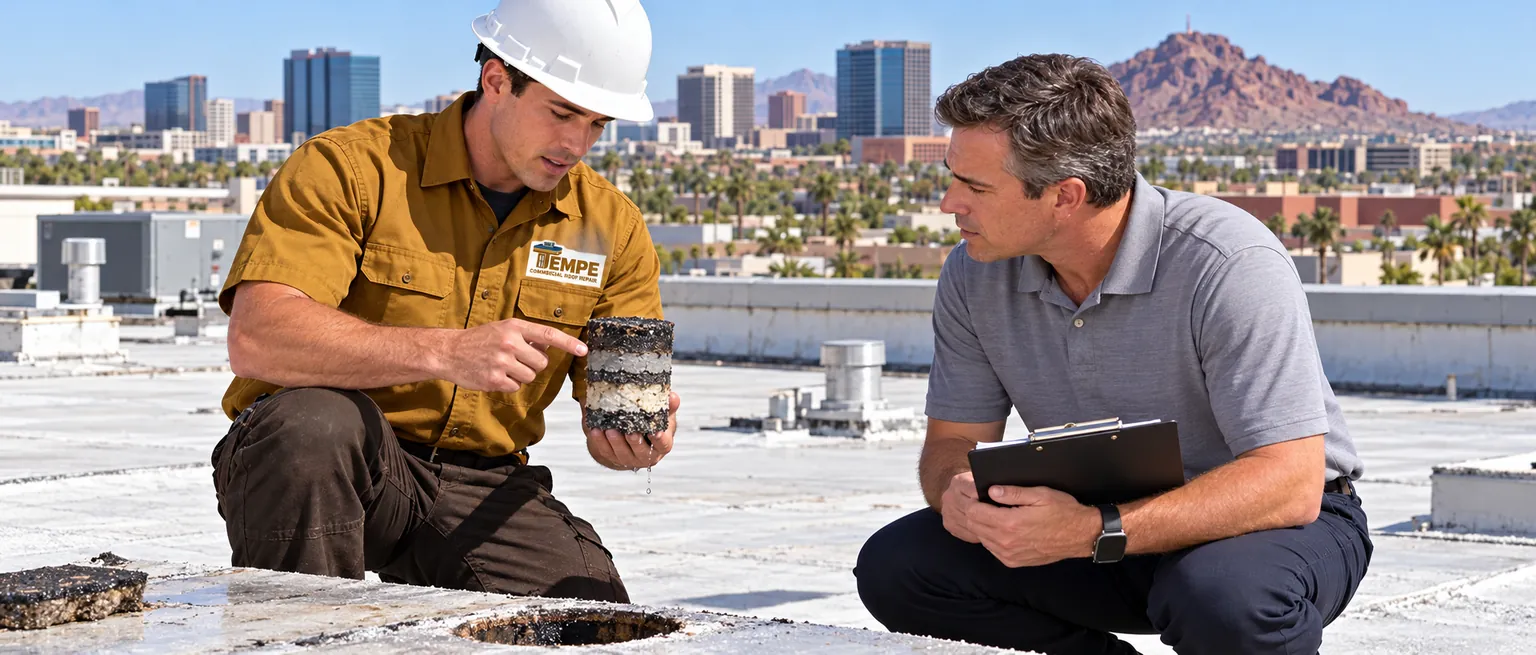
  1. Inspect Your Roof

    We walk the roof and the space under it with a moisture meter, checking seams, laps, fasteners, flashings, drains, and any ceiling stain that points back to an entry point.

    On The Roof
    Roofer holding a roof core sample while a facility manager takes notes
  2. Mark Every Entry Point

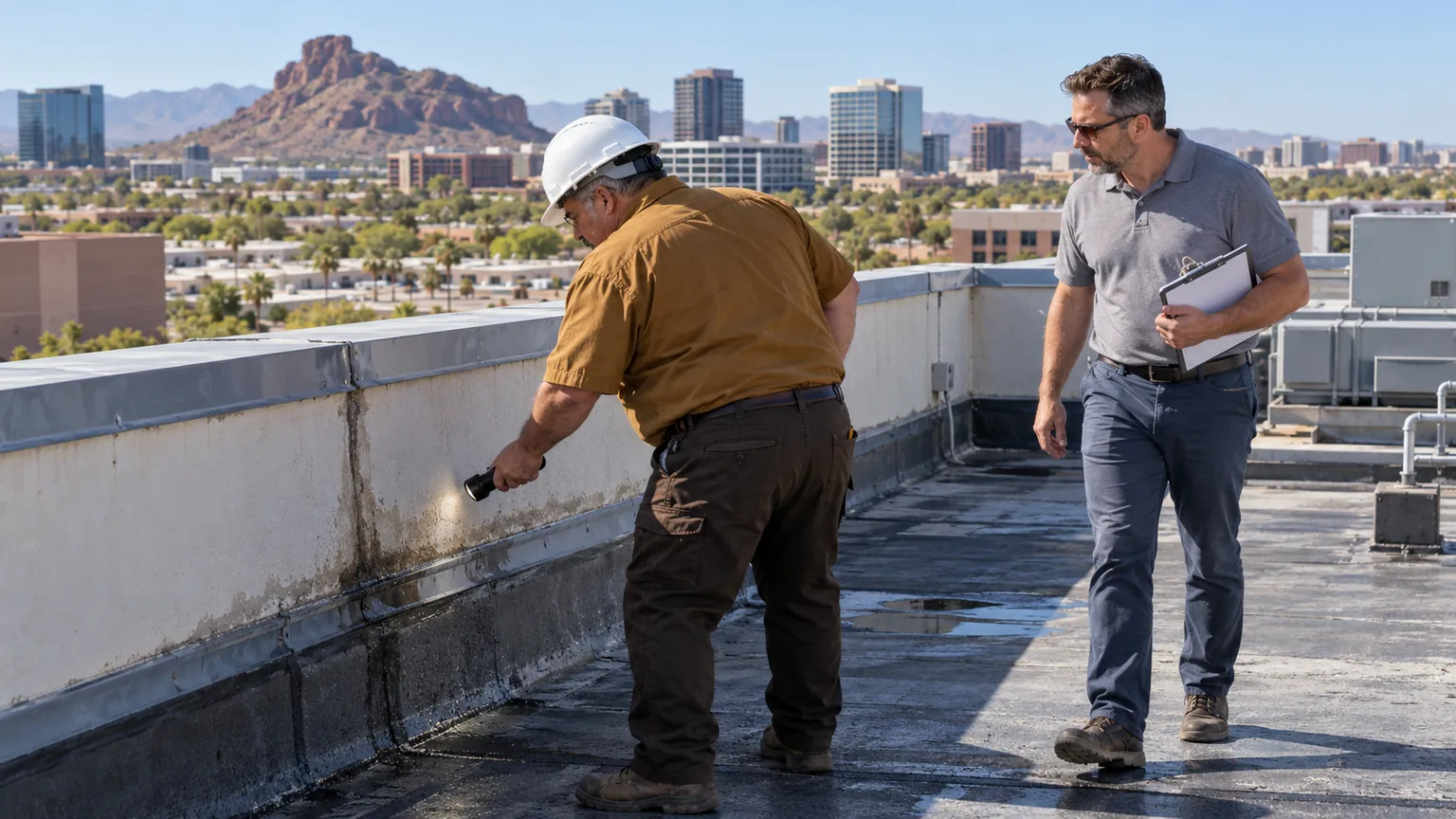
    Suspect spots get marked with paint and photographed. When the source is unclear, one area at a time is water-tested until the drip inside shows up.

    On The Roof
    Roofer shining a light on a wet streak below a parapet cap
  3. Protect The Space Below

    Before any cut goes into the membrane, you and the crew agree on sheeting over equipment and inventory, the path through the building, and working hours.

    At The Building
  4. Repair With Matching Material

    Welds go on TPO, seam tape and cover strips on EPDM, ply patches on built-up roofs, and new fasteners and butyl tape on metal panels.

    On The Roof
  5. Water-Test And Hand Over Photos

    The repaired area gets a hose test where the roof allows it. You receive marked-up photos of what was found, what was fixed, and what can wait.

    Paperwork

Water Dripping Onto Inventory?

Call and tell us which room, how close it is to an exterior wall, and whether it started during rain or while the AC ran. Temporary leak control can come first.

What Fixing It Now Protects

A small opening caught early stays a small repair. Left open, the same spot soaks the layers under it with every storm.

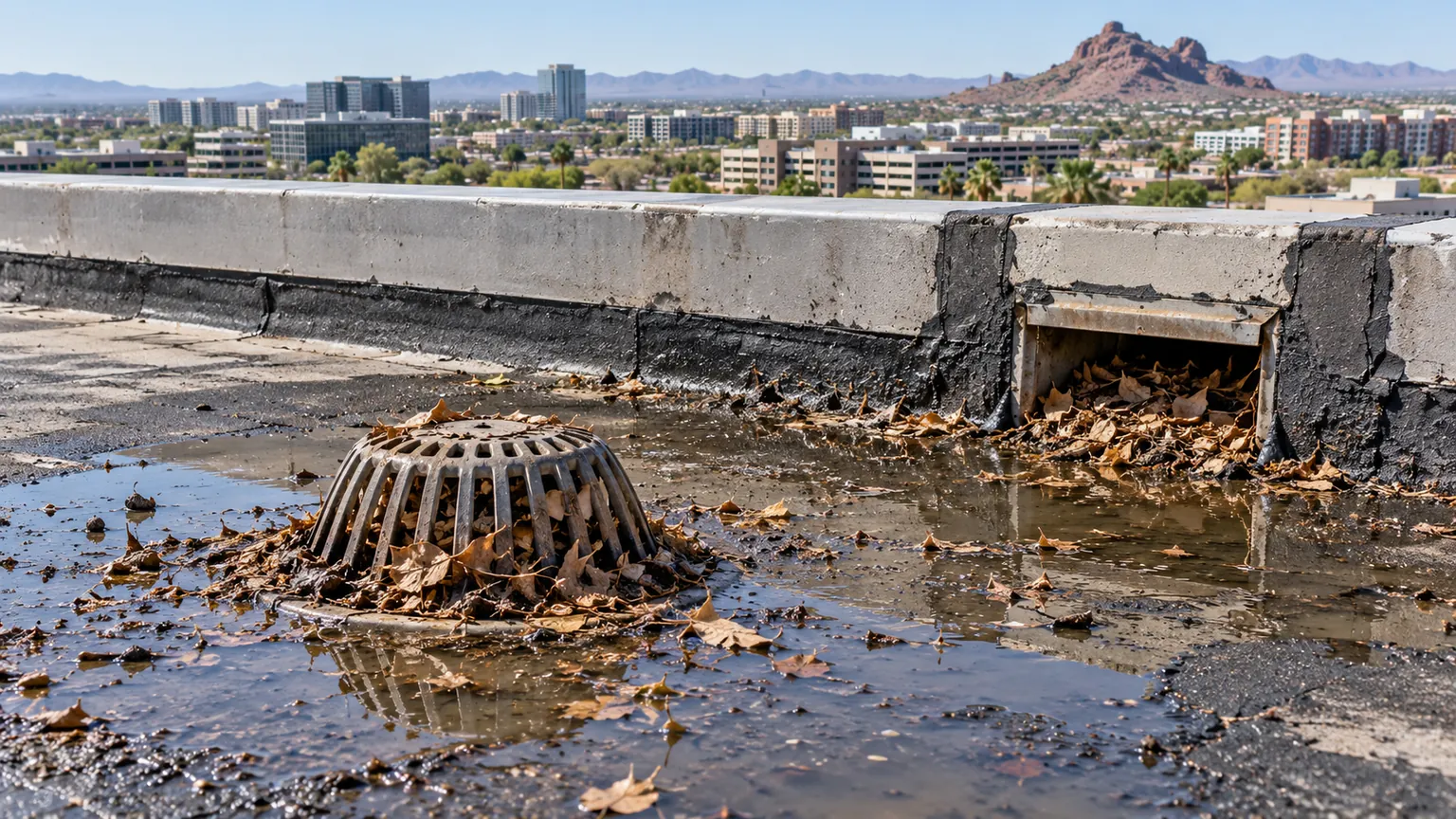
Roof drain and scupper packed with debris beside standing water on a flat roof
  • Dry insulation, which stays in place instead of joining the replacement area
  • Ceiling tile, drywall, and finishes in the rooms below the opening
  • Inventory, machines, and electronics sitting under the wet spot
  • Deck metal around drains, before rust and soft spots set in
  • Your schedule, since a planned repair beats a monsoon-night emergency

Fix This Section Or Budget For A New Roof?

The answer comes from what the roof shows. A moisture scan or core cut tells us how far wet insulation has spread before anyone prices a repair.

Repair Holds When

  • Wet insulation sits in one small, isolated area
  • The deck feels firm and dry, with little rust
  • One or two leak sources trace back cleanly
  • The membrane flexes and its seams hold
  • The roof is well inside its service life

Replacement Wins When

  • Wet insulation spreads in large sections of the field
  • The deck is rusted, soft, or sagging near drains
  • Leaks appear in many unrelated spots
  • The membrane is brittle, cracked, or shrinking at edges
  • The roof is near or past its service life

Tempe And The Six Nearby Areas

Each marker sits by direction from central Tempe. The areas differ in who issues permits and in the roofs that dominate them.

Blueprint-style service area map of Tempe and six nearby areas, placed by direction from central Tempe, not to scaleSouth Mountain ParkSalt RiverI-10Loop 202Loop 202Loop 101US 60TA-0Tempe1A-1Tempe Town Lake2A-2Tempe Maker District3A-3Guadalupe4A-4South Mountain5A-5Ahwatukee Foothills6A-6Discovery DistrictNSERVICE AREANot To ScaleSheet A-0 · Tempe, AZ
  1. Tempe Town LakeNorth · Loop 202

    Mid-rise roofs reached through roof hatches, where the hatch curb itself is a common leak point.

  2. Tempe Maker DistrictWest-southwest · I-10

    Older Broadway shop roofs with skylights, smoke vents, and exhaust fans, each on its own curb.

  3. GuadalupeSouth-southwest · I-10

    Its own town, so a larger repair goes through Town Public Works before the work moves ahead.

  4. South MountainWest · across I-10

    A Phoenix village, where City of Phoenix rules decide when a repair turns into permitted re-roofing.

  5. Ahwatukee FoothillsSouth-southwest · I-10 and Loop 202

    Retail and office centers with pitch pans, conduit runs, and sign wiring crowding the roof.

  6. Discovery DistrictSouth-southeast · Loop 101

    Tech and lab buildings where every cut in the membrane gets closed before the crew leaves.

Tempe Commercial Roof Repair Questions

Short answers on weather, cost, and roof types. Every question we get, with sources, is on the FAQ.

Weather

How does Tempe’s climate damage commercial roofs?

Heat, UV, and monsoon storms cause most of it. Months of direct sun dry out sealant and stiffen older membranes, and the swing from a hot afternoon to a cooler night flexes seams and fasteners until they open.

The National Weather Service in Phoenix sets monsoon season at June 15 through September 30. Its dust, downpours, and gusts lift loose edges and pack drains.

Weather

Should a roof get checked after a big monsoon storm?

Yes. A walk after the storm catches lifted edge metal, torn membrane, and drains packed with dust before the next downpour finds them. Photos taken that week also help if you file an insurance claim.

Cost And Timing

Why do two similar leaks get different repair prices?

Access and detail work explain most of the gap. A seam out in the open field takes far less labor than flashing tucked under a rooftop unit, and a three-story roof reached only by hatch costs more to stage than a one-story roof reached by ladder.

Cost And Timing

How soon after a leak should the repair happen?

As soon as the roof is dry enough for a patch to bond. Temporary control can keep water out in the meantime, but wet insulation keeps spreading under a stopgap that never gets its permanent fix.

Roof Types

Which buildings do you repair roofs on?

Offices, retail centers, warehouses, shops, labs, and plant buildings across Tempe and the six nearby areas. Flat, metal, and industrial roofs all start with the same roof walk and moisture check.

Roof Types

Can a built-up gravel roof be patched?

Often. The gravel gets scraped back, the plies are cut and patched in layers, and gravel goes back down so sun never reaches the patch. A core cut first shows whether the layers below are dry enough to repair.

Get The Leak Traced And Fixed

Tell us where water shows up inside and what sits on the roof above it. We will set up a free roof inspection.

Call Us (623) 310-0181